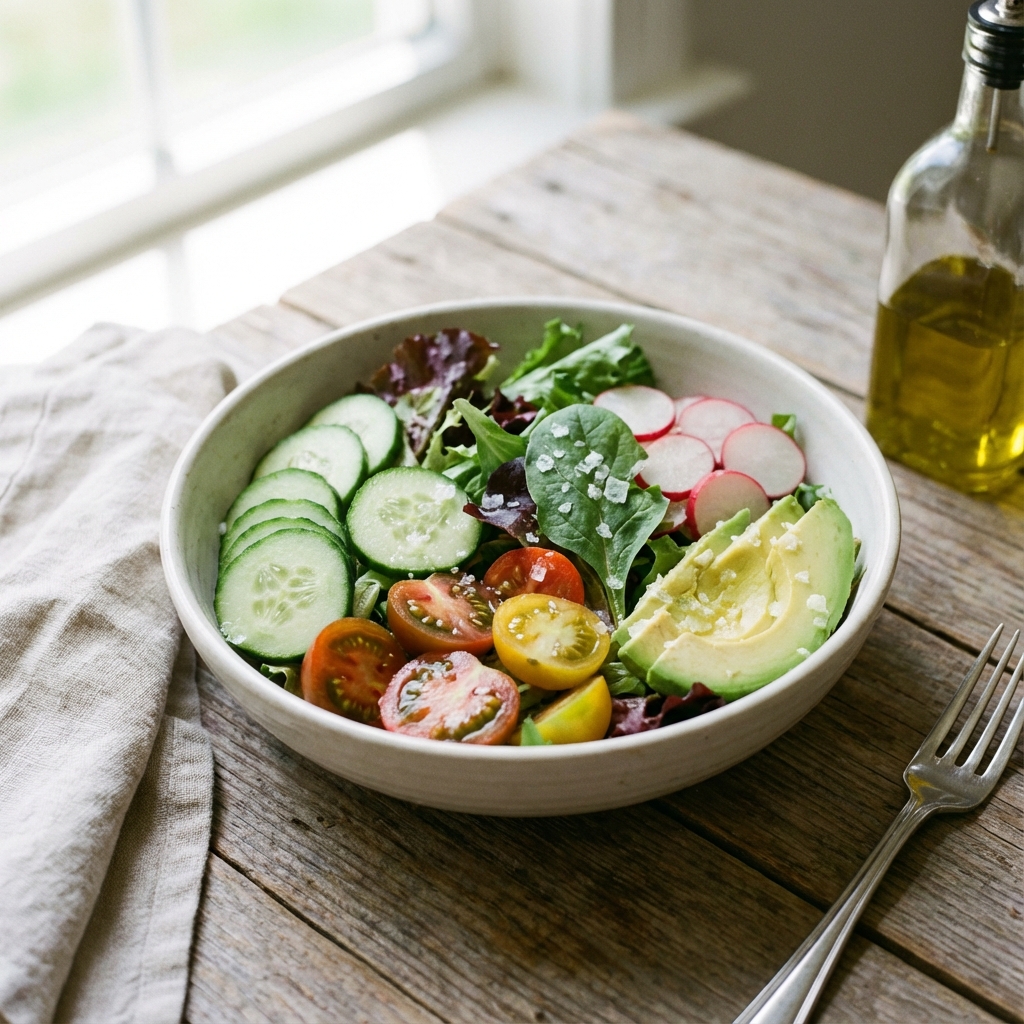
Salad often gets a bad reputation as "rabbit food"—boring, tasteless, and unsatisfying. But usually, this is because the salad is swimming in water. When vegetables like cucumbers and tomatoes are chopped, they release water, diluting the flavor of the dressing and leaving you with a soggy bowl of mush.
The solution? **Osmosis**. By using Himalayan Pink Salt before you dress the salad, you can draw out the excess moisture, concentrate the vegetable's natural sweetness, and create a crunchy, flavorful texture that needs very little added oil to taste intense.
"A salad without salt is just wet leaves. Salt is not a seasoning here; it is a texturizer."
Section 1: The Physics of Salting Veggies
Why do cucumber salads in Japanese or Greek restaurants taste so much better than the ones you make at home? They understand water management.
The "Sweating" Technique
When you sprinkle coarse pink salt on a slice of cucumber, the salt creates a hypertonic environment on the surface. Water inside the cucumber cells (which is hypotonic) rushes out to balance the pressure. This process, called osmosis, does three things:
- Crunch Factor: By removing water, the cell walls become more rigid/dense, leading to a satisfying "snap" when you bite.
- Flavor Concentration: Less water means the "cucumber-ness" is more potent.
- Dressing Adherence: Oil and vinegar slide off wet vegetables. They cling beautifully to dry, salted ones.
Section 2: The Hydration Myth
We are told to drink water to hydrate. But as we discussed with "Sole Water," you need minerals to hold that water. Eating water-rich vegetables seasoned with electrolyte-rich salt is actually a superior form of hydration known as **"Gel Water"** (H3O2).
Dr. Gerald Pollack's research on "Fourth Phase Water" suggests that the water found inside plants is structured differently than tap water and is more easily absorbed by our cells. By salting your salad with pink salt, you are essentially eating a bowl of structured electrolytes.
Section 3: The Recipe - "The Anti-Bloat Bowl"
This salad is designed specifically to reduce water retention (ironically, by using a diuretic vegetable like cucumber) and support digestion.
Hydrating Mineral Salad
Ingredients
- Base: 2 English Cucumbers (thin skins, fewer seeds).
- Secondary: 2 cups Cherry Tomatoes, halved.
- The Onion: 1/4 Red Onion, shaved paper thin.
- The Salt: 1 tsp Coarse Himalayan Pink Salt.
- The Fat: 1 tbsp Extra Virgin Olive Oil.
- The Acid: 1 tbsp Apple Cider Vinegar (unfiltered).
- Herbs: Fresh Dill and Mint (for digestion).
The Method (Do not skip step 2!)
- The Chop: Slice cucumbers into 1/4 inch rounds. Halve the tomatoes.
- The Sweat: Place cucumbers and tomatoes in a colander in the sink. Toss with the teaspoon of Pink Salt. Let them sit for 20 minutes.
- The Drain: You will see a puddle of liquid. Shake the colander. Do NOT rinse them (or you wash away the minerals). Just let the excess water drip away.
- The Mix: Pat the veggies dry with a paper towel. Transfer to a bowl. add onion, olive oil, vinegar, and herbs. Toss gently.
- Taste: You likely do not need more salt. The salt has absorbed into the veggies.
Section 4: Nutritional Breakdown
This is a "high volume, low calorie" meal, perfect for those moments when you want to eat a huge bowl of food but are out of macros.
| Component | Mineral Salad | Caesar Salad |
|---|---|---|
| Base | Cucumber (Hydrating) | Romaine (Low nutrient) |
| Dressing Fat | Olive Oil (Monounsaturated) | Soybean Oil/Cream (Inflammatory) |
| Sodium Source | Pink Salt (84 Minerals) | Processed Cheese/Anchovy Paste |
| Calories (Bowl) | ~150 cal | ~500-800 cal |
Conclusion
A salad shouldn't be a punishment. By understanding the chemistry of salt and cell walls, you can turn simple vegetables into a gourmet side dish that actively supports your hydration and weight loss goals. This is "eating your water" in the most delicious way possible.